- About Us
- Membership
- What’s On
-
-
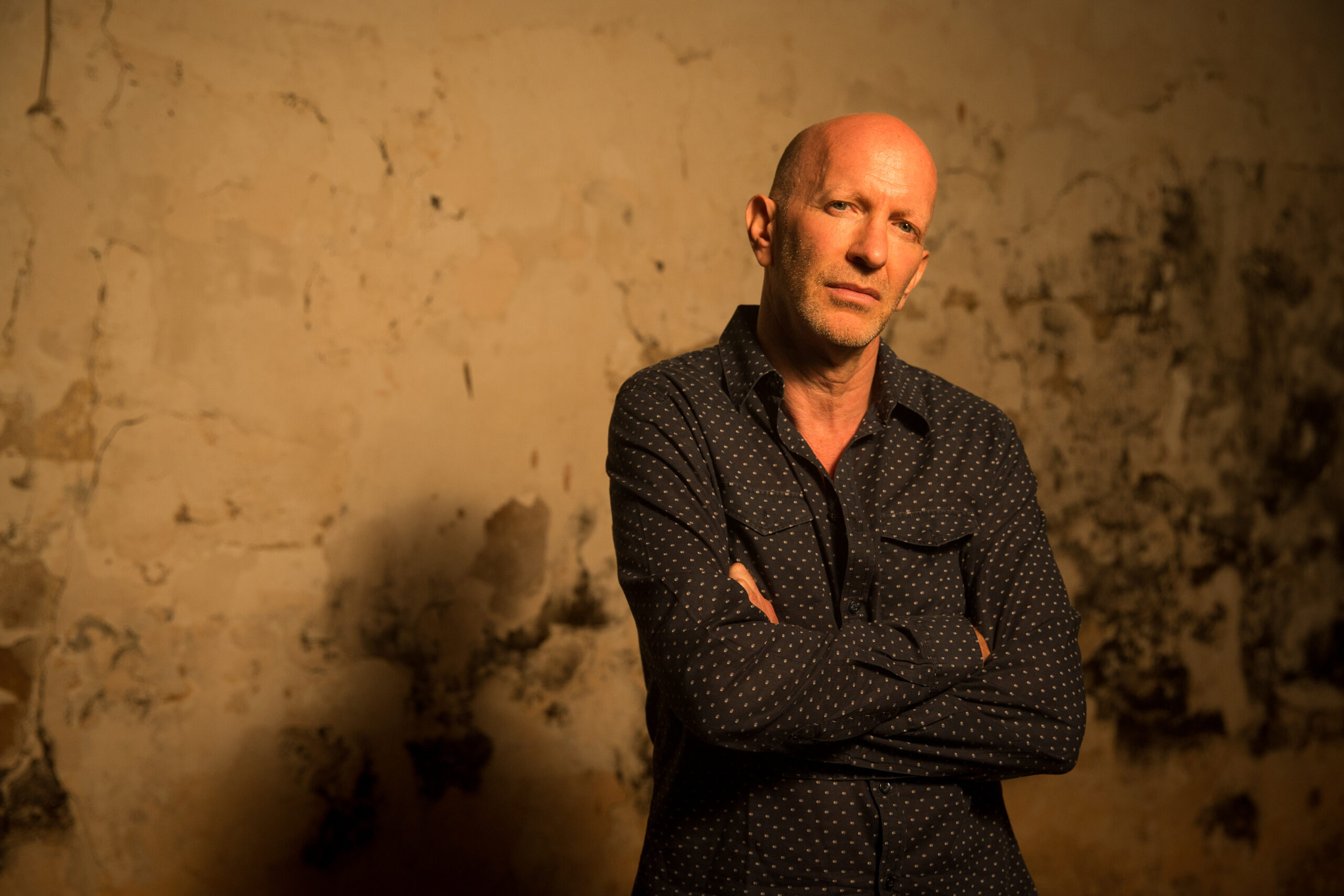
Annual Lecture: Simon Sebag Montefiore – SOLD OUT
Mon. 26 October - 18:30
![Simon-Sebag-Montefiore]()
-
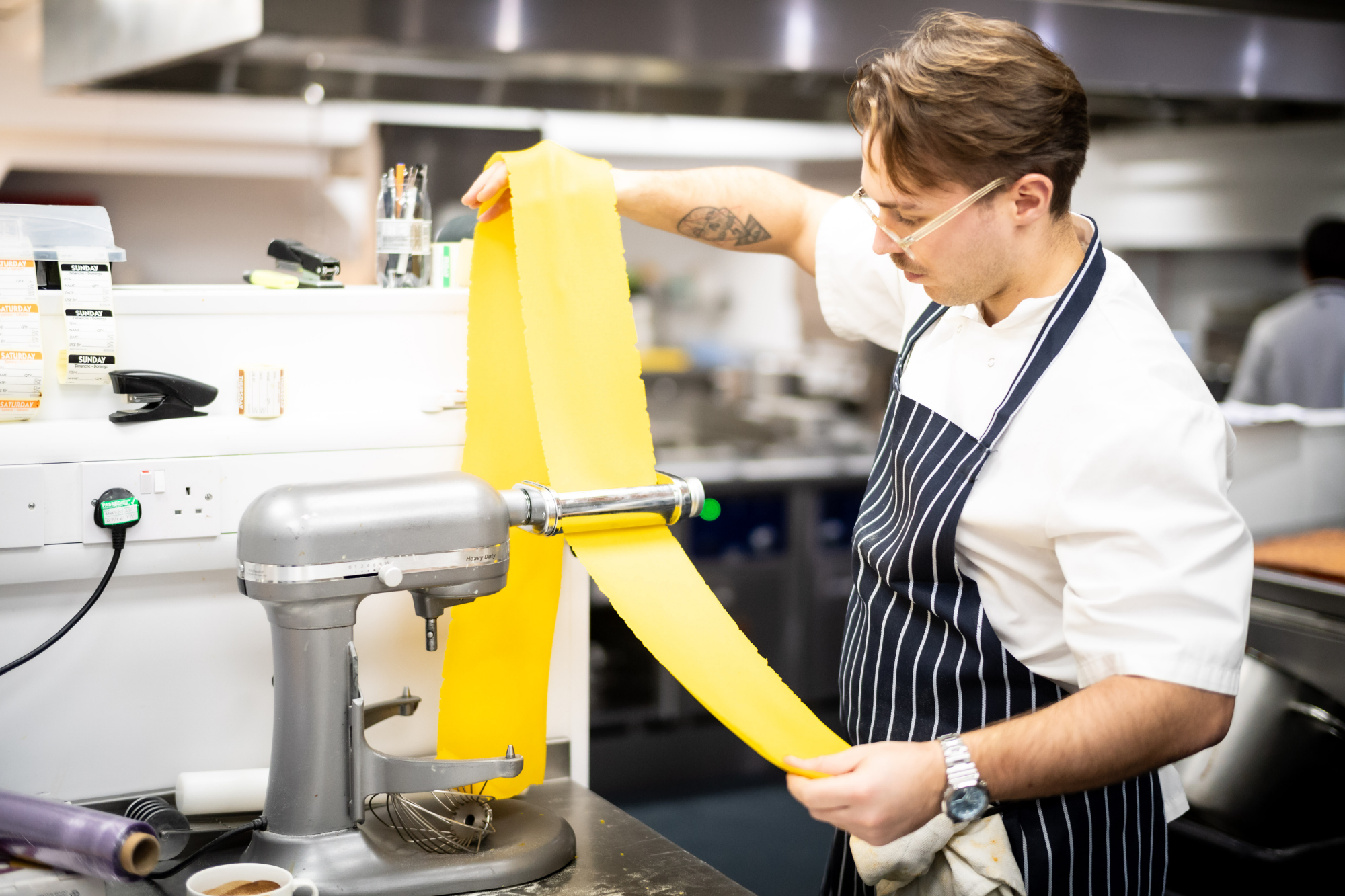
A Tour of Italy with the ROSL Senior Head Chef
Tue. 27 October - 12:00
![pasta making by the Royal Over-Seas League Head Chef]()
-
Classical Guitar Nights in the 1910 Dining Room
Sat. 07 November - 18:30
![classical guitar nights in the 1910 Dining Room]()
-
Truffle Wine Dinner
Thu. 12 November - 18:45
![truffle wine dinner]()
-
Jazz Nights in the 1910 Dining Room
Sat. 14 November - 18:30
![Jazz Nights in 1910 Dining Room]()
-
Classical Guitar Nights in the 1910 Dining Room
Sat. 21 November - 18:30
![classical guitar nights in the 1910 Dining Room]()
-
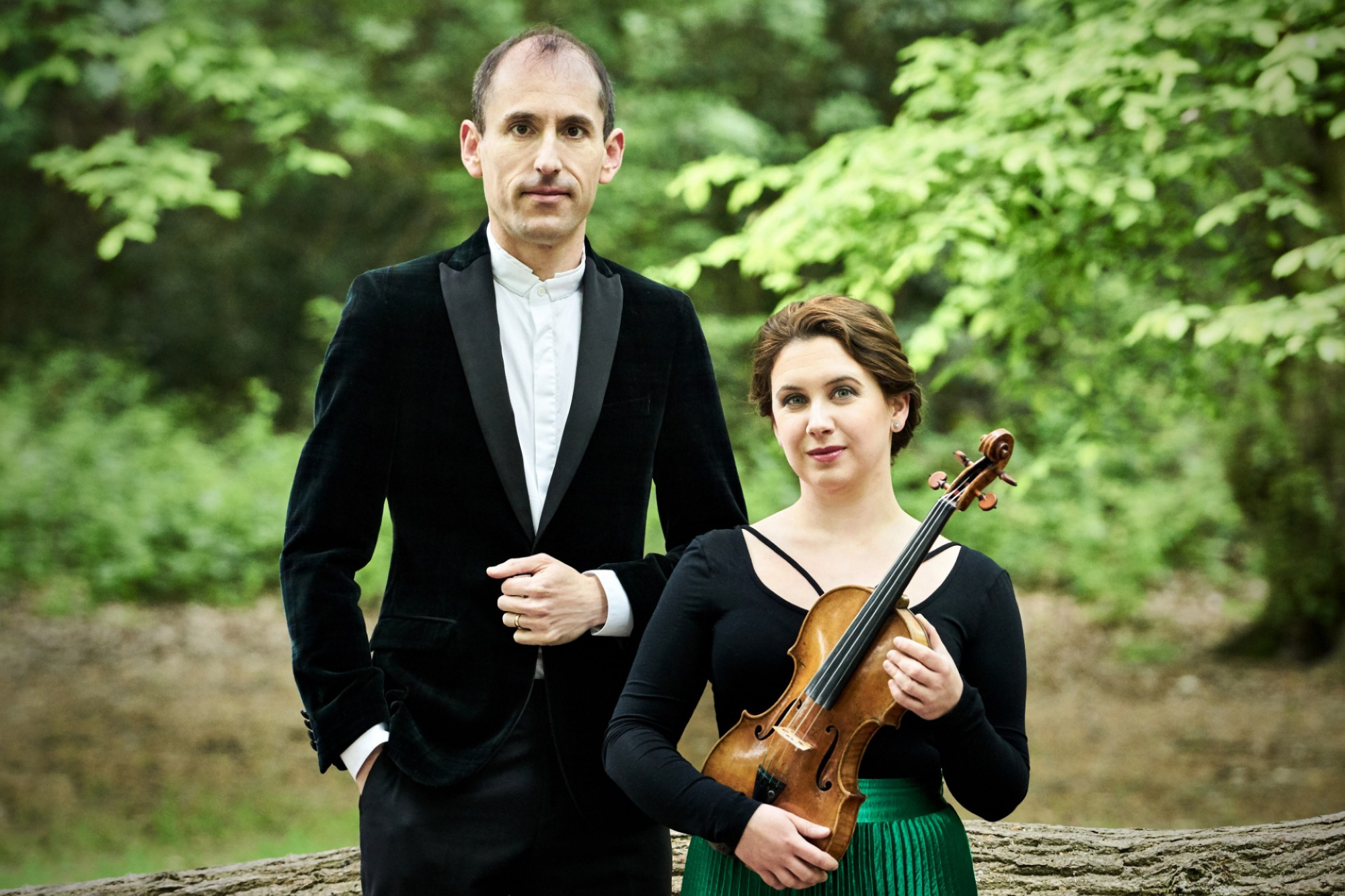
Bach, Brahms, Beach, Boulanger & Beyond: Four Voices in Concert
Thu. 26 November - 18:30
![Chloë Hanslip and Danny Driver]()
-
Temple Choir sings Christmas
Tue. 15 December - 18:30
![ROSL_ARTS_Christmas_Concert_Temple_singers]()
-
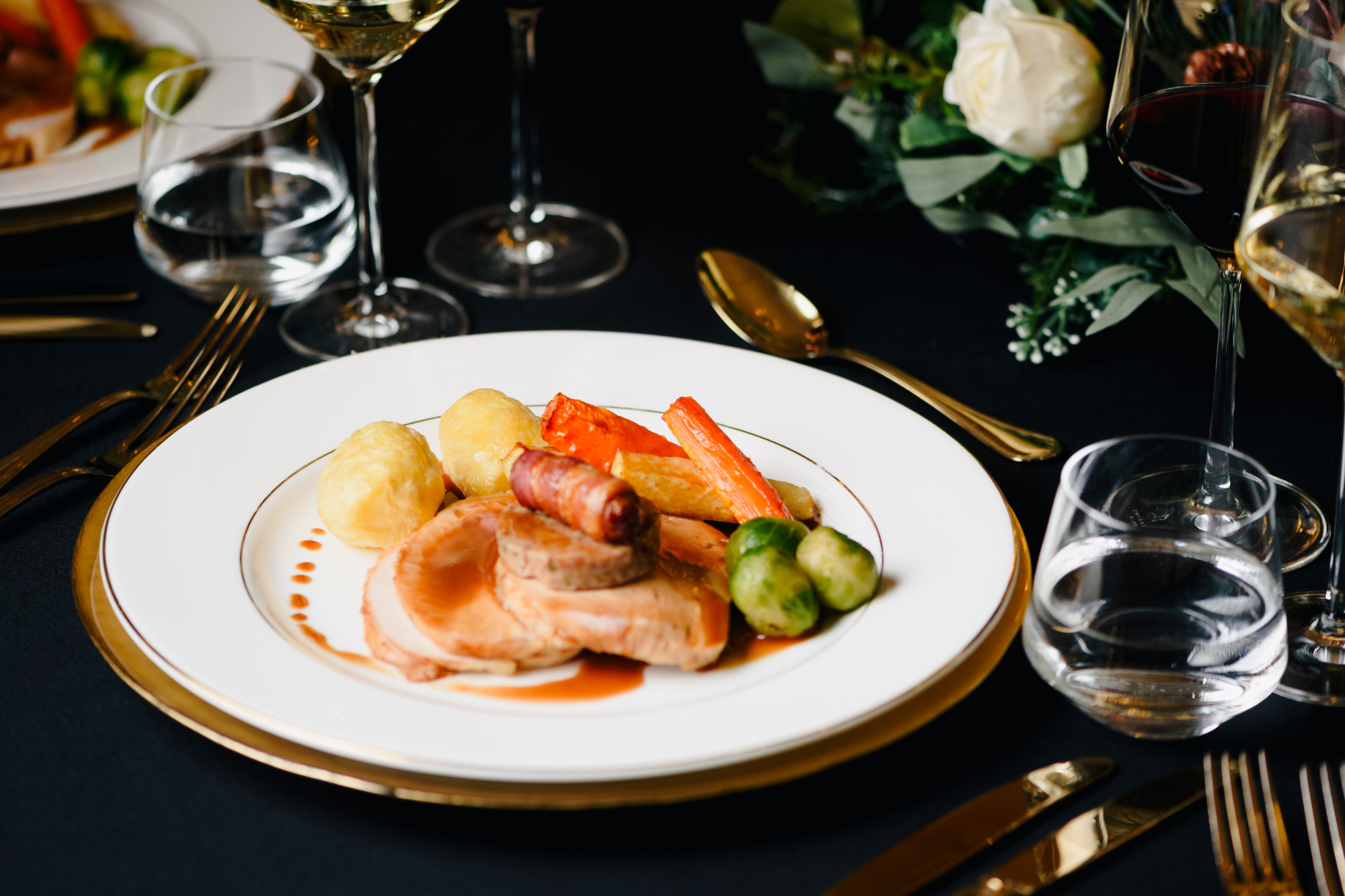
Christmas Day Lunch
Fri. 25 December - 12:30
![christmas-day-lunch-2025-turkey]()
-
Public Affairs Series: Gerald D. Griffin, NASA Flight Director Apollo Program
Mon. 18 January - 18:30
![Gerry Griffin]()
-
-




250th anniversary of American independence
The Special Relationship Between the UK and USA: Royal Diplomacy and a Historic Alliance
26 May 2026
Read time: 8 Minutes
The Special Relationship Between the UK and USA
The rupture that created the United States ultimately forged one of the most enduring alliances in modern history. Robert Hardman, author of Elizabeth II: In Private. In Public. The Inside Story, explores how personal ties at the highest level helped shape a ‘special relationship’ that transcends politics.
From American Independence to a Lasting Alliance
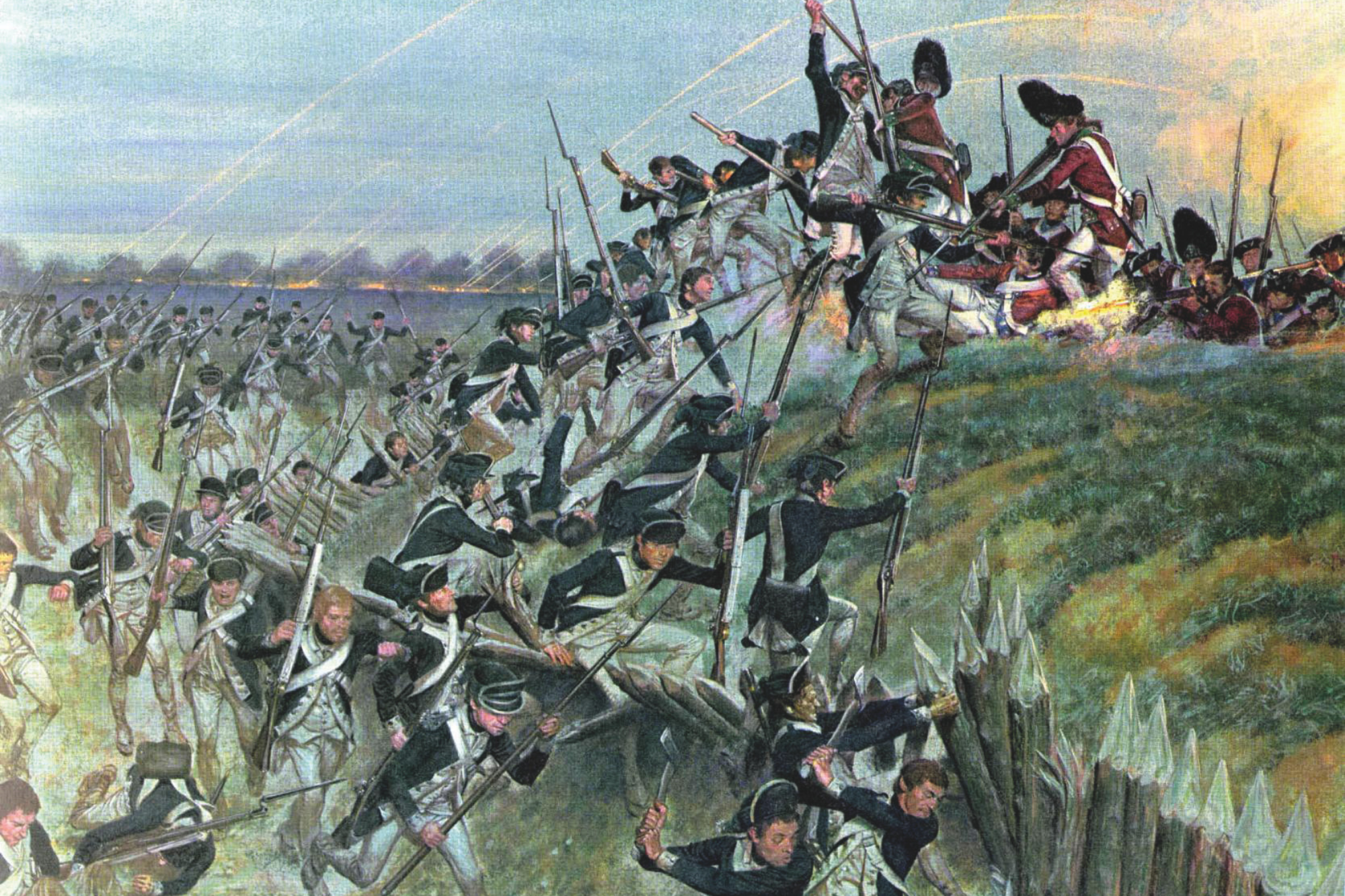
‘America is lost!’ wrote George III in one of the most celebrated documents in the Royal Archives at Windsor Castle. ‘Must we fall beneath the blow?’ The loss of his North American colonies 250 years ago this summer is sometimes cited as a trigger for his first bout of ‘madness’, though his initial nervous breakdown would not actually occur until more than a decade after the founding fathers of the USA signed the Declaration of Independence on July 4, 1776.
The final defeat would not occur until the Battle of Yorktown six years later. Nonetheless, the whole business distressed George so profoundly that he even contemplated abdication.
If only he had been able to see how things would pan out thereafter. Despite a few hiccups along the way – not least the torching of the White House by the British in 1814 (in retaliation for the US burning of what is now Toronto) – America’s break with the ‘tyrant King’ would produce one of the most consequential alliances in history, liberating much of the world from genuine tyranny along the way.
The Origins of the ‘Special Relationship’
It was Winston Churchill who called this ‘the special relationship’. It is a phrase which goes in and out of fashion. During the seventies and eighties, it was actively discouraged by British diplomats, who feared that it looked boastful and would upset other allies. Come the 21st century, both Presidents Obama and Trump proclaimed it enthusiastically (even if the latter would go on to test it to the limits).
Commentators and historians continue to debate its ‘special’ qualities in terms of the relationship between the White House and Downing Street. There have been many moments, from the Suez crisis of 1956 to the Vietnam War, the 1983 US invasion of Grenada and the 2026 US offensive against Iran, when the rapport between the politicians on either side of the Atlantic has been sorely tested.
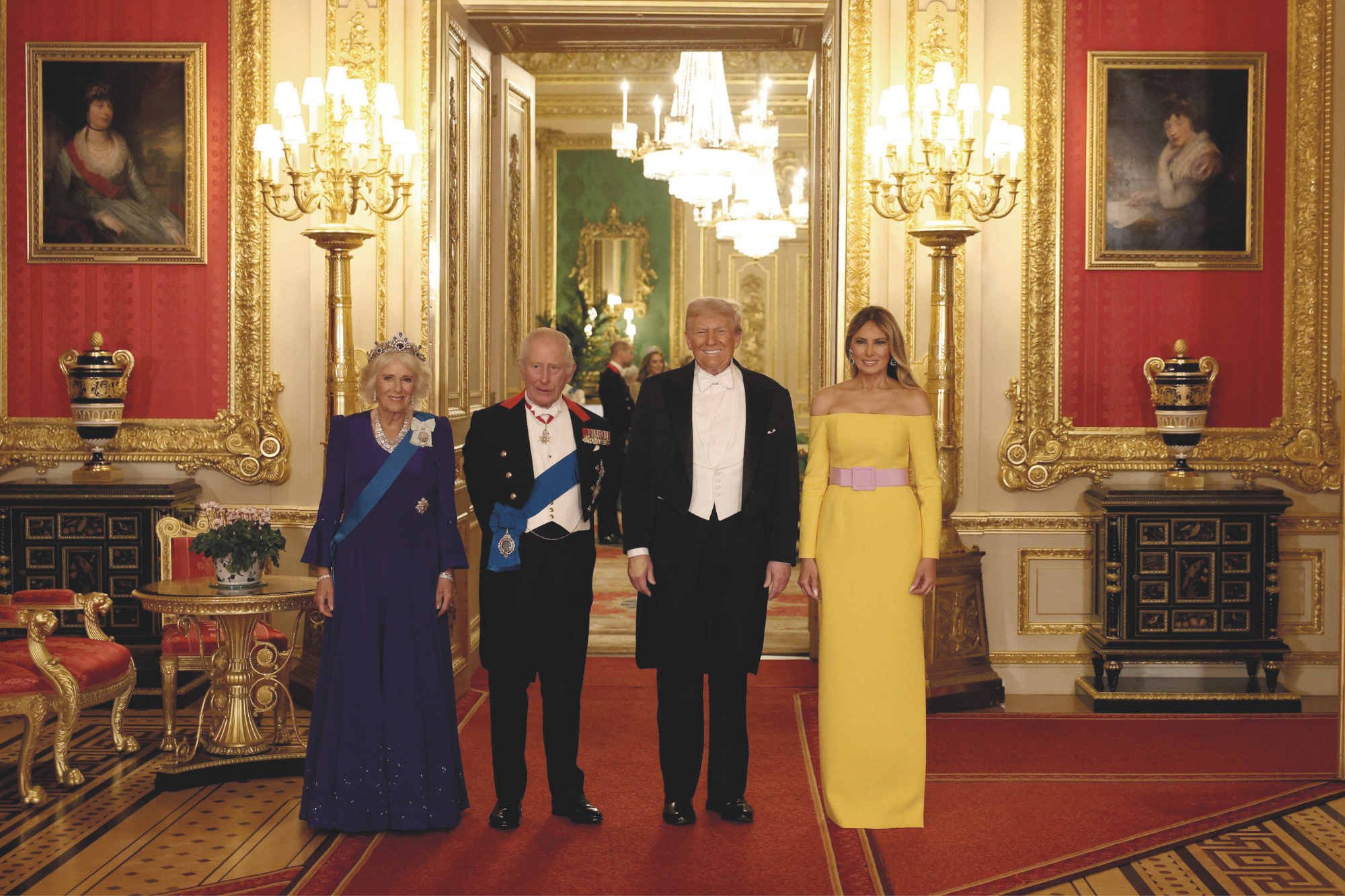
President Trump and the First Lady Welcome King Charles III and Queen Camilla for State Visit Honouring 250 Years of Shared Heritage
Royal Diplomacy and the Transatlantic Relationship
However, I would argue that the truly ‘special’ relationship is the one which operates in parallel between the White House and Buckingham Palace. For that is the one which transcends the hardball of politics and celebrates the cultural, historical, sentimental and personal bonds between two old friends; ties rooted in a shared language, shared ideals and shared sacrifice. And they have never been stronger than in the hands of the last three generations to occupy the throne.
Prior to that, George V was the first British monarch to welcome a US president, Woodrow Wilson, to Britain, in the aftermath of the First World War. It was a stiff encounter. George V’s eldest son, Edward VIII, would sacrifice his own throne in order to marry an American divorcee.
It was his replacement and younger brother, George VI, who would lay the foundations of today’s ‘special relationship’. His state visit to the USA in 1939, the first by a reigning monarch, was critical. For it happened just weeks before the start of the Second World War. Though America would remain neutral for another two years, the visit ensured a strong personal connection between the King and President Roosevelt, one which ensured vital support during those years before Pearl Harbour brought the US into the war.
Queen Elizabeth II and the Modern Special Relationship
It was during this period that the world first heard a voice which would go on to broadcast for longer than any other in history. In 1940, with the Blitz raining down on London, 14-year-old Princess Elizabeth made her debut on the airwaves to reassure evacuated children that ‘all will be well’. The message was so popular in the USA that it was released as a record.
Thus began America’s love affair with Elizabeth, one which was entirely reciprocated. She never forgot that it was those gallant Commonwealth cousins from across what was then still called the Empire who stood shoulder to shoulder from the very start of the war. However, for the rest of her life, she would always see the USA through that wartime prism – the cavalry who came charging alongside when it mattered most. In drab post-war London, she loved the glamour of all things American and was thrilled to pay her first visit as a Princess in 1951 to President Truman’s White House, on behalf of her sick father.
She would come to know 14 presidents. President George W Bush told me that no one in history – American or otherwise – could claim that.
If anyone could be said to represent a ‘special’ relationship, it was her. For just four years after her accession to the throne in 1952, the British and US governments were at loggerheads over the Suez crisis. Britain’s calamitous plot with France and Isreal to reclaim the canal from Egypt appalled Washington. America even threatened to devalue the pound. It was left to the Queen to mend some very damaged fences – and she did. Within a matter of months, her first state visit to the US in 1957 had been a triumph, as prime minister Harold Macmillan reflected afterwards: ‘She buried George III for good and all.’
Four years later, John and Jackie Kennedy were dining at Buckingham Palace.
Britain and the US fell out again over Harold Wilson’s refusal to join the Vietnam War. However, the Queen – as Queen of Australia and head of its armed forces – had 60,000 troops in the conflict. Once again, it was the Windsors who were integral to restoring the alliance. Richard Nixon came to lunch at the palace in 1968 and invited the Queen’s two eldest children to pay a visit to the US. In 1970, a shy Prince Charles had an extraordinary honour – a 90-minute, one on one tutorial in leadership in the Oval Office from President Nixon. The press were more interested in detecting any spark between the prince and 24-year-old Tricia Nixon (there wasn’t one).
There was tremendous excitement in 1976 as the US celebrated its 200th birthday with George III’s great, great, great, great granddaughter – who brought a special gift on board the Royal Yacht: a new Liberty Bell from the same Whitechapel foundry which made the original in Philadelphia. The only glitch came when President Gerald Ford invited the Queen on to the floor for the first dance at the White House ball, whereupon the band decided to strike up ‘That’s Why the Lady is a Tramp.’ Ford was incandescent. The Queen dined out it for years afterwards.
She had an enduring and genuine friendship with Ronald Reagan, an entirely mutual one. The Foreign Office files show that on Reagan’s first trans-Atlantic tour as president in 1982, his overarching priority was not the G7 or Nato summits or even meeting the Pope. It was riding in Windsor Home Park with the Queen. That mattered equally to his host. By then, Britain was at war in the Falklands, her second son was in the thick of the fighting and Britain needed maximum US support. It got it.
In 1983, Reagan fulfilled the Queen’s lifelong dream of seeing Hollywood. As former governor of California, he took over an entire studio for a full gathering of every A-lister in the business for a gala dinner. The Queen and Prince Philip also braved a biblical rainstorm to visit the Reagans’ ranch.
Hollywood would turn out again two years later when the new royal glamour couple – ‘Charles and Di’ – landed in Washington. The Princess of Wales’s turn on the White House dance floor with John Travolta more than made up for the ‘Tramp’ episode nine years before.
The Queen returned in 1991 to honour the shared victory in the first Gulf War, an exemplar of the ‘special relationship’ in action. There was another entertaining blunder when the Queen stepped up to the White House podium at the welcome ceremony. No one had thought to lower it after President George H Bush’s opening remarks. ‘She’s gone!’ exclaimed NBC’s Jim Miklaszeski. ‘All I got is a talking hat!’ It has been known as the ‘talking hat tour’ ever since. The Queen was greatly amused, as was Congress two days later when she came to address a joint session and opened with the words: ‘I do hope you can see me today.’
Elizabeth II would come to know two generations of the Bush family during the 1991 visit. George W Bush was by his own admission a little ‘wayward’ at that stage and proudly showed the monarch a new pair of cowboy boots with ‘God Save The Queen’ etched into them. Though Barbara Bush was most unamused, the Queen was enchanted.
During the Clinton years, Downing Street and the White House were, once again, somewhat distant. It was the Queen who invited the Clintons to stay on board her yacht for the 50th anniversary of D-Day in 1994, something they never forgot.
The Special Relationship in the 21st Century
Amity was restored, by Tony Blair and George W Bush, after the horrors of the 9/11 attacks in 2001. As a result, Bush junior paid a state visit to the UK in 2003, and the Queen returned to Washington in 2007. It was not wholly coincidental that the visit coincided with another long-held event on her ‘bucket list’ – the Kentucky Derby.
Her final visit to the USA came in 2010, when she addressed the United Nations. But presidents would keep coming the other way. In 2011, Barack and Michelle Obama were welcomed to the palace within weeks of the wedding of Prince William to Catherine Middleton. President Obama would go on to become both a friend and admirer of the Queen. Towards the end of his second term, he delivered a speech in which he singled out the greatest leaders of his times: Nelson Mandela – and Elizabeth II. He even arranged his valedictory world tour to coincide with the Queen’s 90th birthday in 2016.
Her last state visitor was Donald Trump, in 2019. He had come for tea a year earlier and had forged something of a bond with the Queen, based on two common factors: both had Scottish mothers and both were Scottish landowners. As Mr Trump told me himself, ‘the first time I met her, we were only supposed to have 15 minutes, and it just went on because she liked me and I liked her. She was so clever and we talked a lot.’ He was determined to get an answer to one question. ‘I kept asking her: “Who was your favourite president? Was it Reagan? Or Eisenhower?” and she just said, “they were all very nice.” That sort of thing.’ It was the same when he tried her on prime ministers. ‘So I realized: that’s why she lasted seventy five years without a complaint – because she was so good at it. The rest of us would have said: “Oh, I liked so-and-so.” But she was so clever. And I know she liked me because we talked a lot.’
Her final presidential encounter was with Joe Biden in 2021. But Donald Trump would be back in 2025 to make an unprecedented second state visit at the invitation of King Charles. Reflecting on that enduring relationship, he declared, ‘the word “special” does not begin to do it justice.’
He would be at odds with Downing Street within a matter of months, but the rapport with the palace was untouched. Plans were duly announced for the first state visit of King Charles III to celebrate the USA’s 250th birthday. George III would be very happy indeed.
Written by Robert Hardman
Journalist, royal biographer and author of Elizabeth II: In Private. In Public. The Inside Story.
Read the full article in the latest issue of Overseas Journal, “Semiquincentennial: 250 Years of American Independence”, June-August 2026.
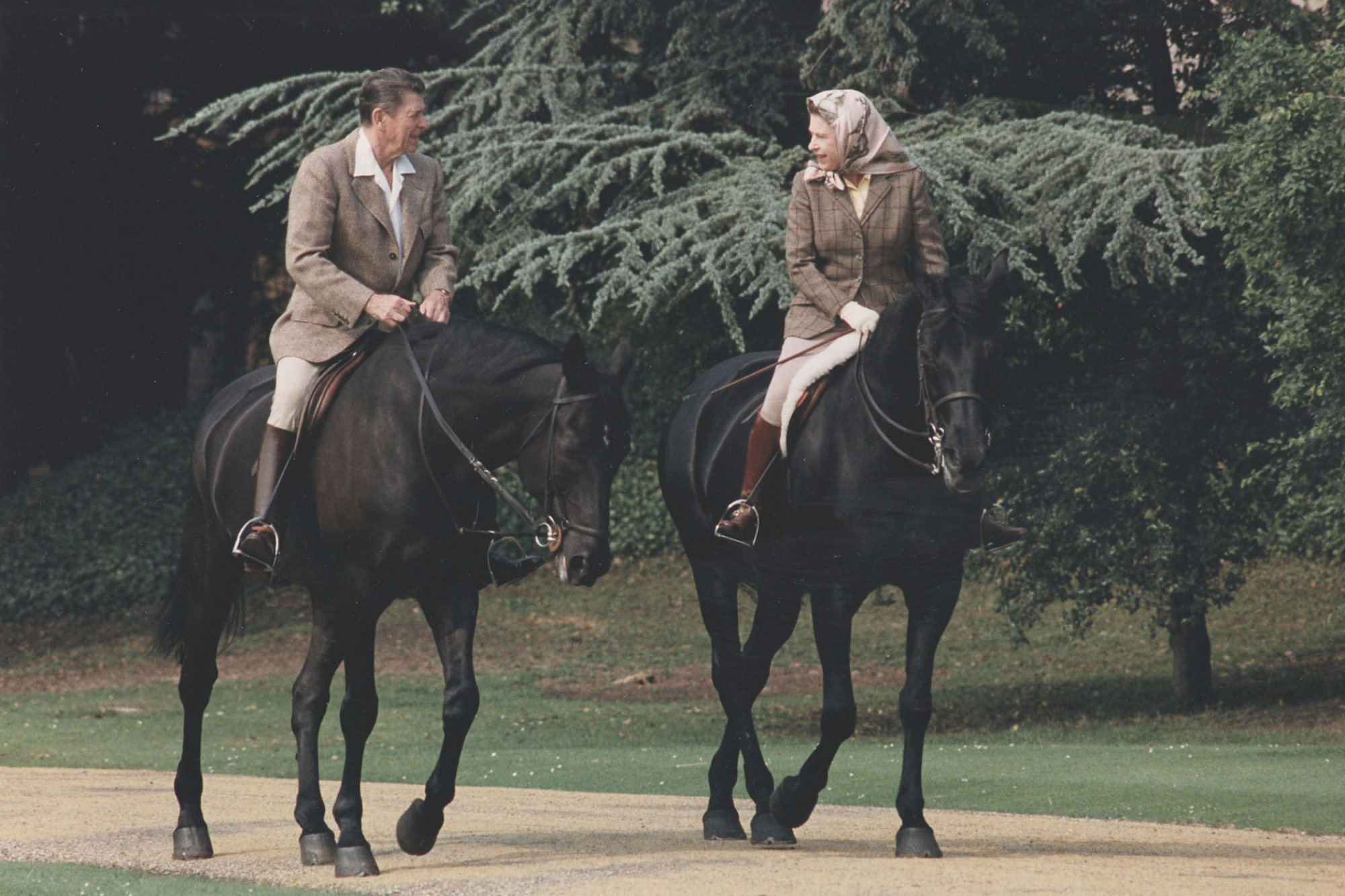
Her Majesty Queen Elizabeth II and and U.S. President Ronald Reagan riding horses in Windsor Home Park on June 8, 1982.
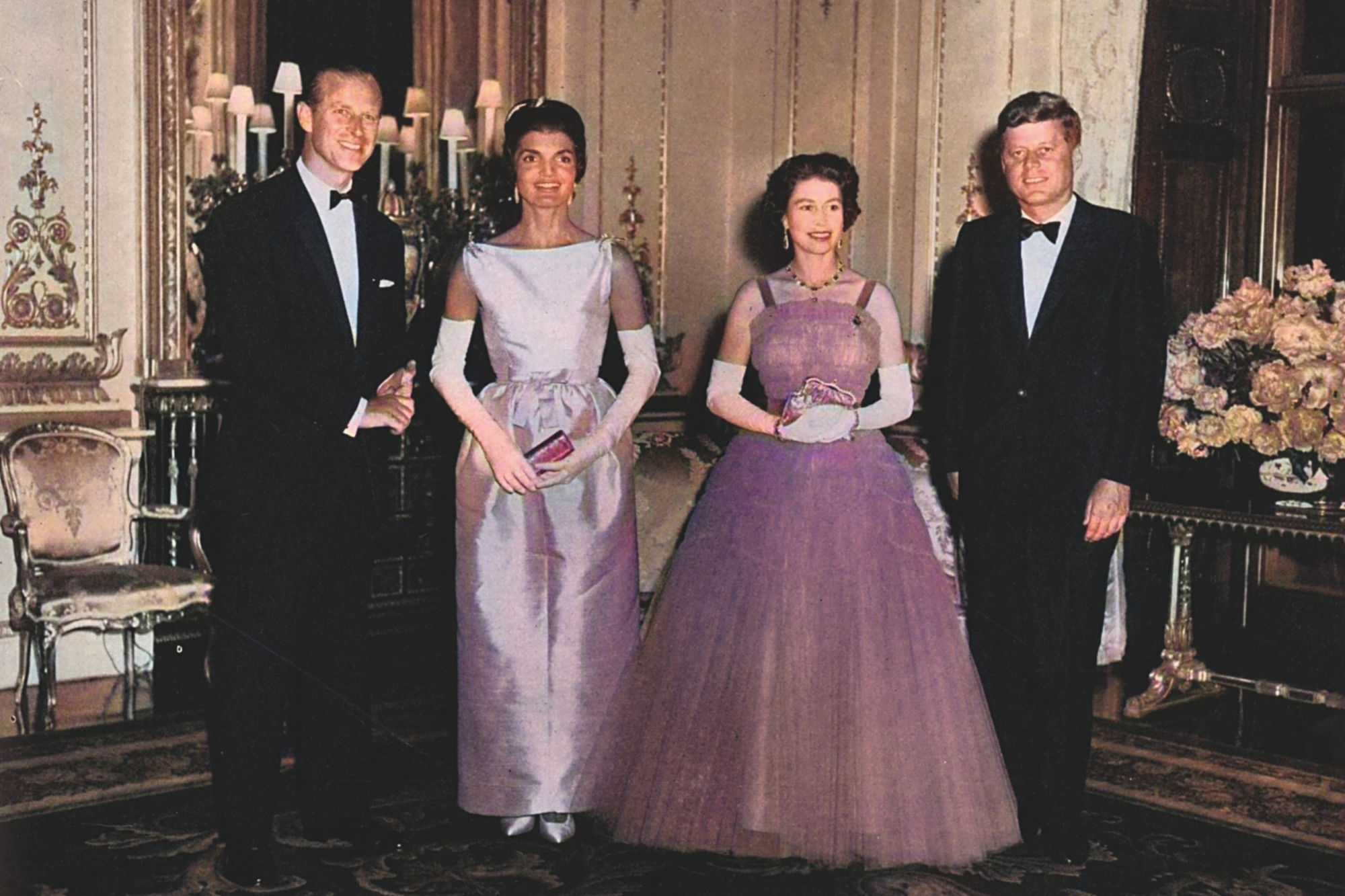
President John F. Kennedy and First Lady Jacqueline Kennedy met Queen Elizabeth II at Buckingham Palace on June 5, 1961